Soccer
Soccer
On this page 9 sections
How to Bet on Soccer
Soccer is often called 'the beautiful game' and it is the most popular sport on the planet. Also known as 'football' outside the US, the game has a rich history that dates back several centuries.
Most countries have several professional soccer leagues. Here in the United States we obviously have Major League Soccer to get excited about. However, in international terms, the best leagues in the world are in European countries. We're talking about France, England, Germany, Italy, and Spain.
Sportsbook bonuses
Sportsbooks taking US players: welcome offers
Offers checked
- 1

Bovada Top pick
Listed by 6 of 8 US review portals
- Sportsbook
- 7 cryptos accepted
- Live dealer
- Fast payouts
Wagering 5x · Since 2011 · Payouts up to 1 hour · Coins BTC, BCH, BSV, LTC
75% up to $750 with a 5x rolloverSportsbook welcome offer
Promo codeBTCSWB750Claim bonus21+ · New players · T&Cs apply
Bonus terms
- Offer
- 75% up to $750 with a 5x rollover
- Wagering
- 5x
- Code
- BTCSWB750
- Casino
- 125% up to $3,750 across your first three deposits
Banking
- Crypto
- BTC, BCH, BSV, LTC, ETH, USDT, Bitcoin Lightning
- Payouts
- up to 1 hour
Brand facts
- Products
- Casino, Sportsbook, Poker, Live dealer
- Founded
- 2011
- Licence
- Anjouan Gaming Board, Union of the Comoros (licence L11549/HM, 2023) and Central Reserve Authority of Western Sahara; historically Kahnawake, then Curacao after 2017
- 2

BetUS
Listed by 1 of 8 US review portals
- Sportsbook
- 6 cryptos accepted
- Live dealer
- Fast payouts
Wagering 14x sports · Since 1994 · Payouts 24-48 hours · Coins BTC, BCH, LTC, ETH
125% up to $2,500 (100% sportsbook + 25% casino)Sportsbook welcome offer
Promo codeJOIN125Claim bonus21+ · New players · T&Cs apply
Bonus terms
- Offer
- 125% up to $2,500 (100% sportsbook + 25% casino)
- Wagering
- 14x sports
- Code
- JOIN125
- Casino
- 250% up to $5,000
Banking
- Crypto
- BTC, BCH, LTC, ETH, USDT, USDC
- Payouts
- 24-48 hours
Brand facts
- Products
- Casino, Sportsbook, Live dealer
- Founded
- 1994
- Licence
- conflicting: Curacao Gaming Commission (bettingnews, vegasodds); Mwali/Moheli, Comoros (Wizard of Odds, updated 2026-09-17); Anjouan also cited in some snippets
- 3

BetOnline
Listed by 2 of 8 US review portals
- Sportsbook
- 16 cryptos accepted
- Live dealer
- Fast payouts
Wagering см. условия оператора · Since 2001 · Payouts up to 24 hours · Coins BTC, ETH, LTC, DOGE
50% free bet up to $250Sportsbook welcome offer
Promo codeFREE250Claim bonus21+ · New players · T&Cs apply
Bonus terms
- Offer
- 50% free bet up to $250
- Wagering
- см. условия оператора
- Code
- FREE250
- Casino
- 100 free spins + 50% up to $250 in sports free bets
Banking
- Crypto
- BTC, ETH, LTC, DOGE, AVAX, BNB, BCH, ADA, POL (Polygon), XRP, SHIB, SOL, XLM, USDT, TRX, USDC
- Payouts
- up to 24 hours
Brand facts
- Products
- Casino, Sportsbook, Poker, Live dealer
- Founded
- 2001
- Licence
- Panama (Junta de Control de Juegos / Panama Gaming Control Board)
- 4

Xbet
- Sportsbook
- 10 cryptos accepted
- Live dealer
- Fast payouts
Wagering 10x · Payouts within 24-48 hours · Coins BTC, LTC, ETH, BCH
100% up to $200 (crypto) / 50% up to $200 (card)Sportsbook welcome offer
Promo codeXBCRYPTO100Claim bonus21+ · New players · T&Cs apply
Bonus terms
- Offer
- 100% up to $200 (crypto) / 50% up to $200 (card)
- Wagering
- 10x
- Code
- XBCRYPTO100
- Casino
- 200% up to $500
Banking
- Crypto
- BTC, LTC, ETH, BCH, USDT, DOGE, ADA, BNB, SHIB, SOL
- Payouts
- within 24-48 hours
Brand facts
- Products
- Casino, Sportsbook, Live dealer
- Licence
- Curacao (gamblingsites, sportsbooks.ag, basketballinsiders); mytopsportsbooks states Costa Rica
- 5

SportsBetting.ag
On the US market since 2003
- Sportsbook
- 11 cryptos accepted
- Live dealer
- Fast payouts
Since 2003 · Payouts within 24-48 hours · Coins BTC, BCH, ADA, DOGE
50% up to $250 in free bets + 100 free spinsSportsbook welcome offer
Claim bonus21+ · New players · T&Cs apply
Bonus terms
- Offer
- 50% up to $250 in free bets + 100 free spins
- Casino
- 100 free spins welcome offer
Banking
- Crypto
- BTC, BCH, ADA, DOGE, ETH, LTC, SOL, TRX, USDT, USDC, XRP
- Payouts
- within 24-48 hours
Brand facts
- Products
- Casino, Sportsbook, Poker, Live dealer
- Founded
- 2003
- Licence
- Panama (Panama Gaming Control Board / Gaming Commission) per vegasodds and gamblingnews; lcb.org says no licence disclosed, formerly claimed Antigua
- 6

MyBookie
On the US market since 2014
- Sportsbook
- 8 cryptos accepted
- Live dealer
- Fast payouts
Wagering 10x · Since 2014 · Payouts 12-24 hours · Coins BTC, BCH, LTC, ETH
100% up to $1,000Sportsbook welcome offer
Promo codeMYB100Claim bonus21+ · New players · T&Cs apply
Bonus terms
- Offer
- 100% up to $1,000
- Wagering
- 10x
- Code
- MYB100
- Casino
- 300% up to $2,000 + 50 free spins
Banking
- Crypto
- BTC, BCH, LTC, ETH, USDT, ADA, DOGE, SOL
- Payouts
- 12-24 hours
Brand facts
- Products
- Casino, Sportsbook, Live dealer
- Founded
- 2014
- Licence
- Curacao (Curacao Gaming Authority); licence number 8048/JAZ2014-028 per snippet
- 7

Las Atlantis
Listed by 2 of 8 US review portals
- 6 cryptos accepted
- Live dealer
Wagering 35x · Since 2020 · Payouts 1-3 business days · Coins BTC, ETH, LTC, USDT
280% up to $2,800 on each of first 5 deposits (up to $14,000)Welcome offer
Promo codeLASATLANTISClaim bonus21+ · New players · T&Cs apply
Bonus terms
- Offer
- 280% up to $2,800 on each of first 5 deposits (up to $14,000)
- Wagering
- 35x
- Code
- LASATLANTIS
Banking
- Crypto
- BTC, ETH, LTC, USDT, XRP, DOGE
- Payouts
- 1-3 business days
Brand facts
- Products
- Casino, Live dealer
- Founded
- 2020
- Licence
- Anjouan (Union of the Comoros)
- 8

SuperSlots
Listed by 3 of 8 US review portals
- 10 cryptos accepted
- Live dealer
- Fast payouts
Wagering 48x · Since 2020 · Payouts 0-48 hours · Coins BTC, ETH, LTC, DOGE
400% up to $4,000Welcome offer
Promo codeCRYPTO400Claim bonus21+ · New players · T&Cs apply
Bonus terms
- Offer
- 400% up to $4,000
- Wagering
- 48x
- Code
- CRYPTO400
Banking
- Crypto
- BTC, ETH, LTC, DOGE, ADA, SOL, USDT, USDC, BNB, AVAX
- Payouts
- 0-48 hours
Brand facts
- Products
- Casino, Live dealer
- Founded
- 2020
- Licence
- Panama Gaming Commission
21+ only. These operators hold offshore licences and accept US players; availability depends on your state and local law. Bonus amounts, wagering and codes are taken from each operator's promotions page — read the full terms before you deposit. Gambling problem? Call 1-800-GAMBLER.
In this article, we will provide an overview of soccer so that you have a solid foundation of knowledge on which to bet. We'll explain how the game works and how the teams are structured. You'll also learn how soccer came to be the headline-making sport that it is today.
The bigger and more popular the league, the more betting markets you can expect to find. For example, for every match in the English Premier League, Spain's La Liga, and Italy's Serie A, you will find dozens of different betting markets to choose from. And that's quite apart from the most obvious match-winner and totals markets.
Most sportsbooks will also offer special bonuses and promotions. These offers are more commonly available for the bigger leagues such as the Champions League and the Europa League. You'll also find promotions relating to major competitions, such as the World Cup and the European Championships.
Rules and Gameplay
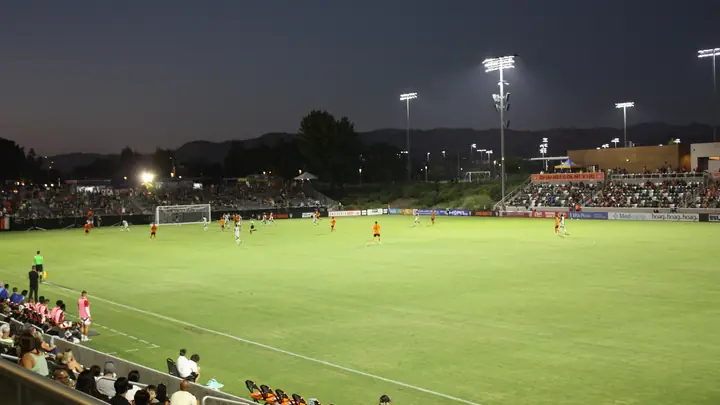
Soccer is a sport that involves two teams. Each team has 11 players with several others available 'on the bench' for substitution purposes. The main objective in the game is to score more goals than the opposing team.
The game is played on a 'pitch', which is a rectangular turfed field. This pitch is carefully marked to separate it into two halves, with a center circle in the middle. A goal box is located at each end of the pitch.
A regulation soccer ball measures 68–70 cm in circumference. Players primarily move the ball by kicking it, hence the name football. However, they can also redirect the ball in the air with the head or any other body part. The only exceptions are the hands and arms.
Scoring a goal involves directing the ball into the goal net of the opposing team. Should a player put the ball into the net of his own team, it is an 'own goal'. That goal counts as if the opposing team had scored it.
In More Detail
Each team of 11 players comprises forwards, midfielders, defenders, and one goalkeeper. As in many other team sports, the goalie is the last line of defense. Goalkeepers are the only players on the pitch who are allowed to use their hands in normal gameplay. (See 'Throw In' for an exception in the next section of this article). However, they can only do so in the goal box that surrounds the goal itself. This box is 20 yards wide and 6 yards deep on a regulation soccer field.
Each team works to move the ball towards the goal of the opposing team in order to try and score. The players can move the ball by passing it to their teammates or dribbling it with their feet.
Both teams want to control the ball. If one team is in possession, the other will look to get the ball back. They can do that by intercepting a pass, stealing the ball from the player dribbling, or punching the ball away with a tackle with no excessing physical contact. If the player does have excessive contact, they will be called for a foul.
A Game of Two Halves
Most soccer games have a duration of 90 minutes. This time is divided into two equal halves of 45 minutes each. A halftime break of 15 minutes is taken between the two halves.
When the ball goes out of bounds, a goal is scored, or a foul occurs, the game is paused. When the play stops, there are eight ways in which the game resumes. Those ways are as follows:
Kick-Off
The soccer ball is placed in the center circle and kicked off by a team to start the game. A kick-off also starts the second half and to resume play after a goal is scored.
Thrown In
If the ball goes out of bounds, a player from the team that did not touch the soccer ball last throws it back onto the field from the sidelines. This is the only time that a player may touch the ball with his hands.
Goal Kick
When the ball is put behind the goal line by an attacking player, it is recovered by the goalkeeper. The goalkeeper then places the ball and throws or kicks it back into play from the box.
Corner Kick
When the ball is put behind the goal line by a defending player, the opposing team gets a free kick from the corner of the pitch. This gives them a good chance of crossing the ball for another player to take a shot at the goal.
Indirect Free Kick
If a foul is committed and it was not excessive, the team of the fouled player gets a free kick from the spot of the foul. With an indirect free kick, a player cannot score a goal without the soccer ball touching another player.
Direct Free Kick
If an excessive foul is committed, the team of the fouled player gets a direct free kick from the spot of the foul. In this case, the ball does not have to touch another player. Instead, it can be struck directly at the goal if it is appropriate to do so.
Penalty Kick
A penalty kick is awarded to the attacking team if a defending player commits a foul against them in the goal box. The player taking the penalty kick has a one-on-one shot at the goal with only the goalkeeper to stop it. No other players can move until the soccer ball is touched.
Drop Ball
For anything besides a foul, the referee stops play and drops the ball neutrally between two opposing players who then try to gain control of it.
Referees in Soccer
Several side officials are active in soccer (more commonly referred to as linesmen) but there is only one referee on the field. The referee runs around the field with the players and keeps a close eye on the action as it unfolds. When the referee spots a foul having been committed, he blows a whistle to suspend play. He then dishes out the appropriate punishment.
The referee also keeps a careful eye on the time. He uses a watch to keep track of any pauses in play, such as for a substitution or a foul. All of this 'stoppage time' is added to the 45 minutes so that play can continue for a few minutes more.
Fouls and Consequences
The referee on the pitch is responsible for spotting and calling fouls. If the foul is excessive, the referee can give a yellow card to the offending player. This is an official warning to the player. If that same player warrants another yellow card, they are sent off the pitch for the remainder of the game. A player who has been sent off cannot be substituted for.
If the referee deems that a foul was extremely excessive, they can hand out a red card. In this case, the offending player is sent off immediately. A red card will also be given to any player who intentionally uses his hands or arms to prevent a ball from being scored in their goal.
The Offside Rule
An offside rule violation occurs when an attacking player is closer to the opponent's goal than the ball and any defensive player apart from the goalkeeper. This can be quite difficult for the referee to spot, so there are two linesmen on each side of the pitch who focus on spotting offsides.
When an offside violation is called on one team, the other team receives an indirect kick from the spot where the offside was committed.
How the Teams Work
In soccer, there are four key positions. Their names and descriptions are as follows:
Forwards
The forwards are attacking players. They tend to spend most of their time in the opponent's half of the pitch, waiting for an opportunity to strike the ball and score a goal.
Midfielders
These players are the instigators who play on defense and push the ball up to the forwards. They can also be on the attack themselves and try to score because, although they are mainly in the middle of the field, they can play all over. There are attacking midfielders and defensive ones, and they are the main ones that control the soccer ball for their team.
Defenders
The defenders mainly play in their own half of the pitch. Their main objective is to keep the opposing team from scoring. However, they aren't prevented from pushing forward and scoring.
Goalkeepers
Each goalkeeper is the last line of defense for his team and spends almost the whole game in the goal box. While a goalkeeper can use his hands to stop the ball from going into the goal, they cannot handle the ball outside of the goal box. If they do, they will be whistle for committing a handball.
The goalkeeper is also the player who directs other defensive players on his team to set up for corner kicks and closer indirect and direct kicks from the opposing team.
Soccer Strategy & Tactics
Soccer is a game that employs a variety of strategies and tactics. Most of them involve a team playing to their particular strengths, whether it be scoring, playing defensively, or controlling the ball in the midfield. That is one of the beautiful things about soccer - there are many different types of teams and no two of them play exactly alike.
The tactics and strategies involved in soccer vary according to how the game unfolds. For example, if a team relies on their defense to win and they happen to be losing 2-0 after the first half, they will obviously change their strategy and attack more in the second half in an effort to make a comeback.
Many sports fans also have their own soccer betting strategies that they use when betting on the game.
A Brief History of Soccer
Many experts believe that soccer dates back to 2500 B.C. That's because there were similar games played in Ancient Egypt, Greece, and China that involved both a ball and a net.
The Roman game of Harpastum used a ball and a net with teams trying to possess the ball and score. And so did the game of Episkyros in Ancient Greece. There was also a similar game of Tsu'Chu which was played from around 300 B.C. in China.
Throughout the centuries, other types of games that have involved a ball and a net include Japan's Kemari, Native American Pahsaherman, and Indigenous Australia's Marn Grook.
So much for speculation. What we do know for sure is that soccer evolved in Europe in medieval times. In 12th century England, the teams were mobs of players, and the game was very physical. Similar forms of the game were played in France, Germany, and Italy in the following centuries.
Modern Soccer
Modern soccer formed in 19th century England where the private schools called the game 'football'. That early game was more like rugby. However, over the years, the violent aspect decreased, and there came to be more dribbling and kicking.
In the middle of the 19th-century, football clubs started to emerge. The 'Cambridge Rules' were established at Cambridge University in 1848, with students moving up in the ranks for the local football clubs.
The Football Association (FA) was established in 1863. This led to universal soccer rules as well where players could not carry the ball and could not trip or kick the shins of opposing players. There were 128 teams in the FA in 1887, and the main league in England in the Football League was formed in 1888. This was the first top-level league in the country and is now known as the English Premier League.
At the end of the 19th century, soccer took off worldwide, especially in the rest of Europe and South America. The International Federation of Association Football (FIFA) was established in 1904 with the seven-member nations of Belgium, Denmark, France, the Netherlands, Spain, Sweden, and Switzerland, and Germany.
In 1903 the first World Cup was held. At that time, FIFA had 41 members. The sport of soccer enjoyed immense growth over the next few decades, with many nations having several leagues. Again, Europe and South America were still the hot spots of the game. As of 2021, that has not changed, and FIFA now has over 200 member nations.
Hall of Fame
There are many soccer players who deserve to be recognized for their contribution to the sport. Fortunately, there is a US Soccer Hall of Fame and a World Soccer Hall of Fame to provide such recognization. The latter Hall of Fame opened in 2011 and is located in Mexico.
As you'd expect, there is much debate about who is the greatest soccer player of all time. However, three names are mentioned the most often for that title. Those are Pele, Diego Maradona, and Lionel Messi.
The still-active Cristiano Ronaldo is starting to get mentions as the greatest of all time. Others on the shortlist of the best soccer players include Franz Beckenbauer, Johan Cruyff, Zinedine Zidane, Ronaldo, Michel Platini, and Roberto Baggio.
The Ballon d'Or is given to the best player in Europe, and until 1995 only Europeans could win the award. There is also the prestigious FIFA player of the year award. From 2008 to 2019, Lionel Messi and Cristiano Ronaldo won the Ballon d'Or every year but once.
Distinctive Elements
The main distinctive element in soccer is the pace of the game. As long as the ball is in play and there are no fouls called, the players and the soccer ball are in constant movement all over the field. It is the ultimate team game with all the players on the team having the same objective - to score more goals than their opponents.
The top soccer teams play a beautifully paced game with precision passing and superb teamwork. And that's exactly why soccer has come to be known as 'the beautiful game'.
Statistics
Unlike other sports, soccer statistics are not weighed as much as other sports. That is not to say there are not many important soccer stats. The most crucial soccer statistics for soccer teams is the win and loss record. Two other very important stats for teams are goals scored per game and goals conceded per game.
If you watch any soccer match on TV, you will notice that other stats are also shown. These may include team stats such as shots on goal, corner kicks, fouls, yellow cards, red cards, and offsides.
For the men on the pitch, the important stats will differ according to their playing position. For example, a key stat for forwards is goals scored while an important stat for goalies is the save percentage. Every position has different stats, and they are looked at by other teams as well as bettors who are preparing to bet on particular games.
Popularity and Cultural Impact
The cultural impact of soccer is enormous. Many of its top players become household names, and key events attract attention even from those who wouldn't consider themselves to be regular sports fans. For example, the World Cup is only rivaled by the Olympics as a global spectator event is concerned.
Another reason why soccer is so popular is because it can be played by the masses. You can play football virtually anywhere as long as you have a ball and some space. This makes it a bit hit with kids in schoolyards right across Europe, as well as with plenty of adults who play recreationally at parks and sports centers.